AI agents and automation, SEO and GEO, ROI-focused websites, and custom software built around your business.
Manuel Technologies
HomebuildWebsite development
( BUILD )

Website development that works hard after launch

A website should make the business easier to understand, easier to find, and easier to choose. We build fast, accessible websites around the content, integrations, and measurement that make those outcomes possible.

For organisations replacing a slow site, launching a new offer, or outgrowing a page builder.

Prices are published. Four tiers from GHS 2,000, with what each includes, and a comparison against market rates.

Related reading: our study of 56 UK accountancy websites, covering AI crawler access, structured data and response times.

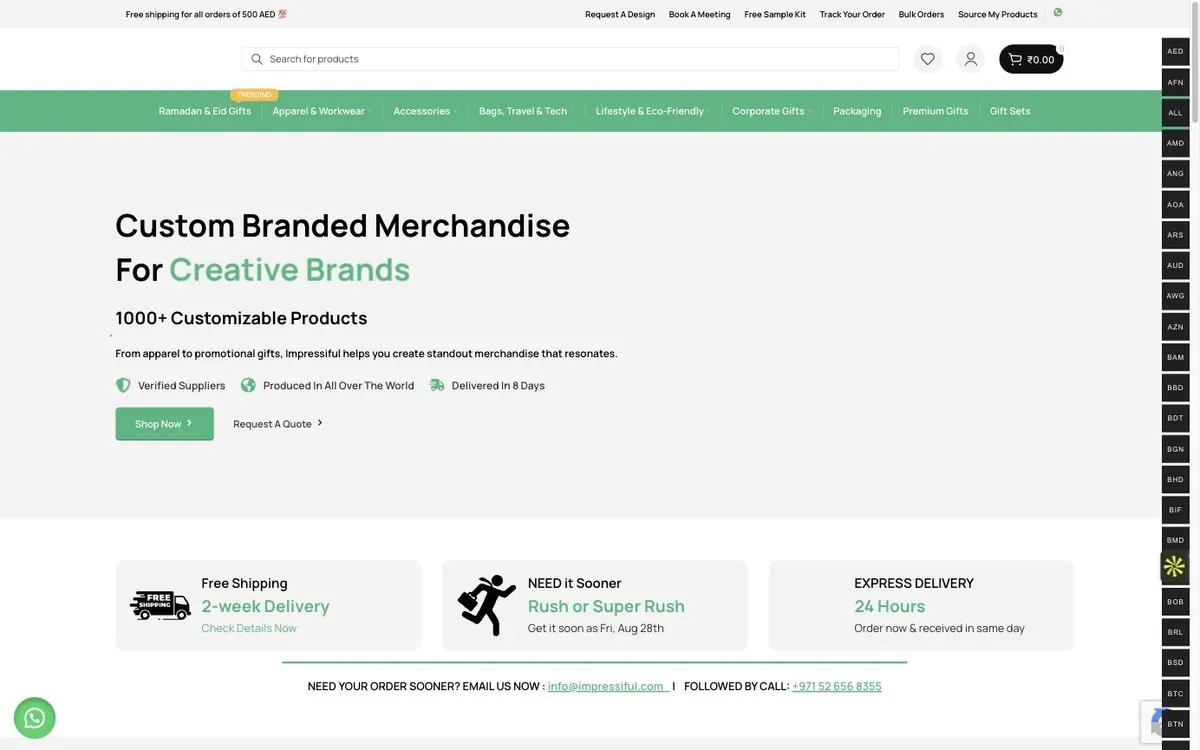
Impressiful online store, built by Manuel Technologies
Delivered

Impressiful

1,000+ products
( Who this is for, and why )

For organisations replacing a slow site, launching a new offer, or outgrowing a page builder.

  1. 01

    Strangers who search for what you sell find websites. Google does not show an Instagram account or a WhatsApp number for a service query. A business with no site is invisible to the customer who is already looking.

  2. 02

    It is the one channel you own. The platforms decide who sees a post and can change the rules or restrict an account with nobody to call. A domain, its pages and its rankings are yours, and they compound year on year.

  3. 03

    Trust is decided before contact. A stranger about to send money or book a service looks for the website first, because a business that has one has usually been around and can be found again.

  4. 04

    A page builder or a template stops scaling. When you need payments, bookings, a catalogue, or a site that loads fast on a mid range phone in Kumasi, the build has to be engineered rather than assembled.

( How the work runs )
01

Start with the commercial job of the site, then map the journeys, content, and technical constraints around it.

02

Build with a small, deliberate component system, semantic HTML, responsive layouts, and performance budgets from the first commit.

03

Ship a site your team can maintain. Structured content, predictable deployments, and analytics that answer useful questions are part of the build.

( What you get )
  • Information architecture and page planning
  • Next.js or equivalent modern front end
  • CMS or structured content model where it earns its place
  • Technical SEO foundations, analytics, and launch checks
( How we work )

Clear work. Properly shipped.

A good process makes the work easier to understand, easier to measure, and easier to improve.

  1. 01

    Understand the work

    We start with the goal, audience, constraints, existing stack, and the result that would make the project worthwhile.

  2. 02

    Choose the right first move

    We turn the brief into a focused plan, with clear priorities, technical decisions, responsibilities, and measures of progress.

  3. 03

    Build and test properly

    We design, implement, and test the work against real devices, real data, accessibility requirements, and the edge cases that matter.

  4. 04

    Launch and improve

    We release carefully, watch the evidence, and use what we learn to improve performance, visibility, and the next useful iteration.

( Frequently asked questions )

Why does a business need a website?

Because search sends strangers to websites, not to social accounts; because a stranger deciding whether to trust you looks for one; because payments, bookings and orders need somewhere to happen that does not depend on one person answering a chat; and because a site is the one channel you own rather than rent. If your customers all come by referral and orders fit in a chat, you may not need one yet. The moment strangers start searching for what you do, you do.

How long does website development take?

A focused marketing site can take several weeks. The real duration depends on content readiness, integrations, approval time, and whether the site needs custom software rather than presentation pages.

Will the website be fast on mobile?

Performance is treated as a build requirement. The work covers image handling, font loading, JavaScript weight, layout stability, and real user measurement rather than relying only on a desktop speed test.

Can you rebuild an existing website without losing SEO?

Yes. A rebuild should begin with an inventory of valuable URLs, queries, links, metadata, and redirects. The launch plan preserves relevant addresses and tests the new crawlable structure before release.

Do you provide website maintenance?

The preferred model is a maintainable codebase with documented deployments and clear ownership. Ongoing technical support can cover releases, performance monitoring, SEO changes, and improvements after launch.

Have a specific brief, dataset, or existing system in mind?