AI agents and automation, SEO and GEO, ROI-focused websites, and custom software built around your business.
Manuel Technologies
HomebuildWeb design and UX
( BUILD )

Web design that makes the next action obvious

Good web design gives every page a job. We connect positioning, information architecture, content hierarchy, and interaction design so visitors can understand the offer and move forward without friction.

For businesses whose website feels generic, difficult to navigate, or disconnected from how customers decide.

Prices are published. Four tiers from GHS 2,000, with what each includes, and a comparison against market rates.

Related reading: our study of 56 UK accountancy websites, covering AI crawler access, structured data and response times.

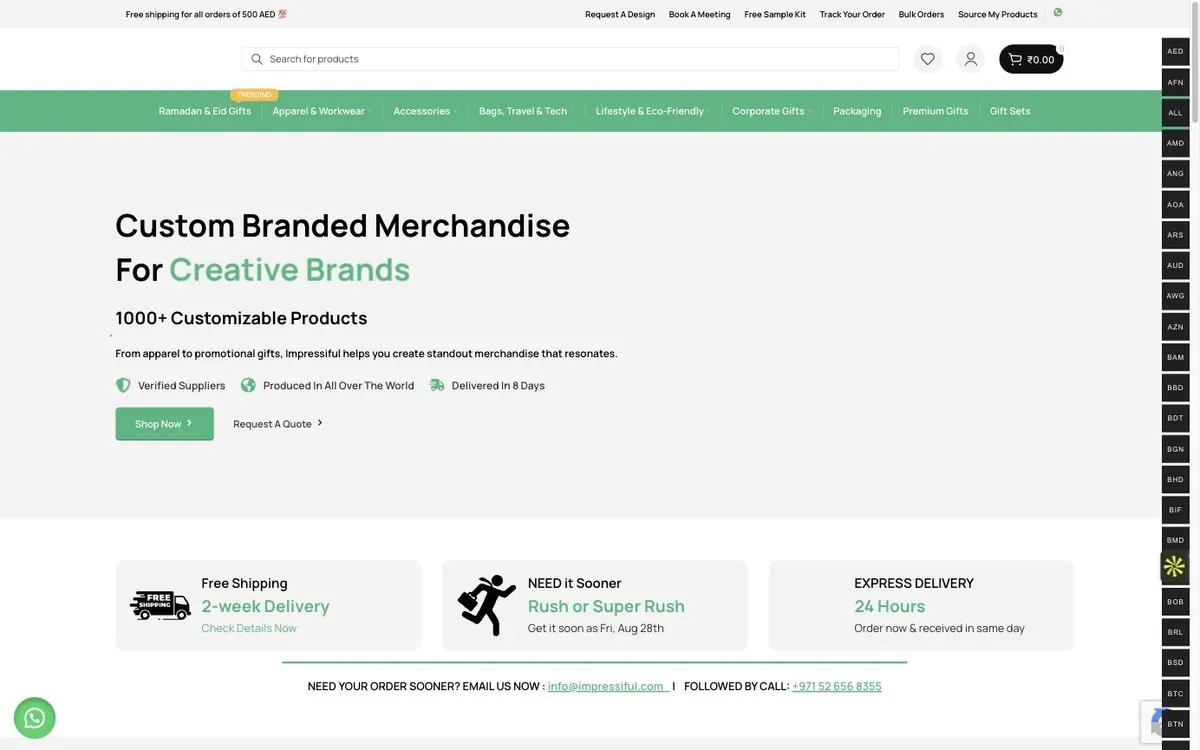
Impressiful online store, built by Manuel Technologies
Delivered

Impressiful

1,000+ products
( Who this is for, and why )

For businesses whose website feels generic, difficult to navigate, or disconnected from how customers decide.

  1. 01

    Visitors decide in seconds, on a phone. If the first screen does not say what you do and what to do next, they leave before the site has loaded the rest.

  2. 02

    A template looks like a template. The customer has seen the same layout on ten other sites this month, and it tells them nothing about your business.

  3. 03

    Design is where conversion lives. The position of the action, the order of the information and the wording of the button decide whether a visit becomes an enquiry.

( How the work runs )
01

Turn audience questions and business priorities into a page hierarchy that can be scanned quickly.

02

Design the states people actually encounter: empty, loading, error, success, mobile, keyboard, and reduced motion.

03

Use a coherent type, spacing, colour, and component system so future pages feel like part of the same product.

( What you get )
  • Content and navigation structure
  • Responsive page and component design
  • Accessible interaction patterns and states
  • Design tokens and implementation guidance
( How we work )

Clear work. Properly shipped.

A good process makes the work easier to understand, easier to measure, and easier to improve.

  1. 01

    Understand the work

    We start with the goal, audience, constraints, existing stack, and the result that would make the project worthwhile.

  2. 02

    Choose the right first move

    We turn the brief into a focused plan, with clear priorities, technical decisions, responsibilities, and measures of progress.

  3. 03

    Build and test properly

    We design, implement, and test the work against real devices, real data, accessibility requirements, and the edge cases that matter.

  4. 04

    Launch and improve

    We release carefully, watch the evidence, and use what we learn to improve performance, visibility, and the next useful iteration.

( Frequently asked questions )

Why does a business need professional web design?

Because the site is judged in seconds on a phone, and a layout designed around what your visitor is there to do converts where a template does not. Design decides what someone reads first, where the action sits and whether they trust what they see. A generic site is not neutral; it tells the customer you are interchangeable with the last ten sites they saw.

What is included in web design and UX?

It can include information architecture, page hierarchy, wireframes, visual direction, responsive layouts, interaction states, accessibility decisions, and a component system ready for development.

Can you improve an existing design instead of starting again?

Yes. An audit can identify unclear hierarchy, weak calls to action, accessibility barriers, inconsistent components, and mobile problems before deciding which parts deserve a redesign.

How does UX design affect SEO?

Clear structure helps people and search engines understand a site. Useful headings, descriptive links, accessible navigation, fast rendering, and content that answers intent support both usability and organic visibility.

Do you design mobile first?

Mobile constraints are considered at the start, not added at the end. Layout, tap targets, content order, forms, and performance are tested at narrow widths before the design expands.

Have a specific brief, dataset, or existing system in mind?